
Building a Love for God!

Editor’s Note: We continue our series of blogs for those who are reading the Bible with us cover-to-cover this year. Interspersed with our thoughts on our daily reading, we want to provide some tips about reading the Bible in general. Today we want to explore …

Building a Love for God!

o   When we build a heart of love for God we love Him by praising His worthy name to all who will listen.

Moses explains ones of the great exercises that develops a heart for love:

You must fear the LORD your God and worship him and cling to him. Your oaths must be in his name alone. He is your God, the one who is worthy of your praise, the one who has done mighty miracles that you yourselves have seen. When your ancestors went down into Egypt, there were only seventy of them. But now the LORD your God has made you as numerous as the stars in the sky! “You must love the LORD your God and obey all his requirements, laws, regulations, and commands. Deuteronomy 10:20-22, 11:1 (NLT)

This is exactly what we see Paul talking about in Philippians:

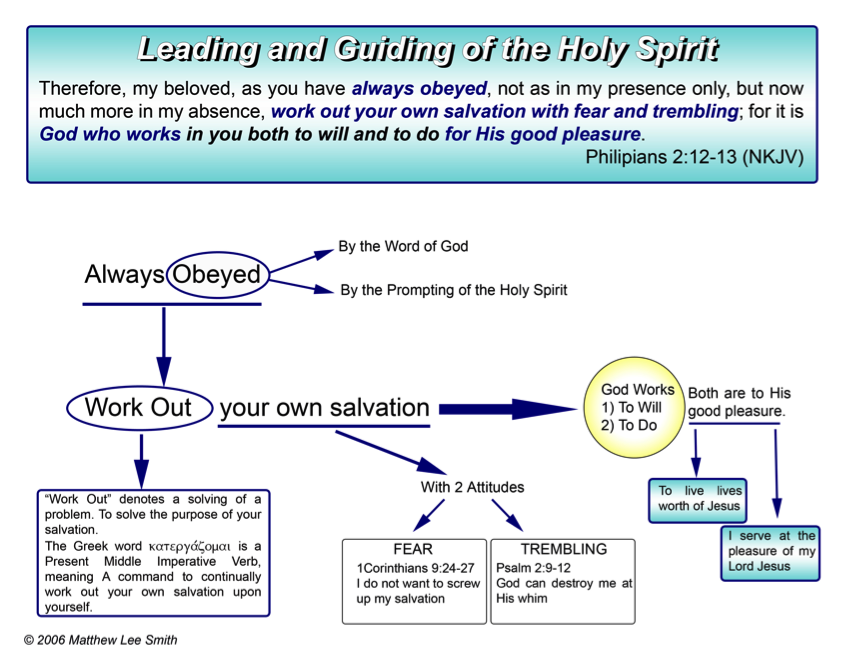
Therefore, my beloved, as you have always obeyed, not as in my presence only, but now much more in my absence, work out your own salvation with fear and trembling; for it is God who works in you both to will and to do for His good pleasure. Philippians 2:12-13 (NKJV)

Follow the process carefully …


o   Building a heart of love for God begins with obedience – whether someone is watching or not.

o   Building a heart of love for God means seeking to discern how the pieces of His will fit into the scheme of my personal life.

o   Building a heart of love for God requires an attitude of fear – knowing that we could totally and completely walk a path God never intended for our lives, thus displeasing Him and being unfruitful in His kingdom.

o   Building a heart of love for God finds us constantly listening and seeking God’s heart and will – in the Word of God (the Bible) and through the voice of God the Spirit – because we know God wants to work in us to accomplish something supernatural with us.

o   Building a heart of love for God drives us back to the motivation of a life lived with and for God – the good pleasure of His will.

God longs to grow close to you! As we move closer to God, he grows closer to us.

Draw near to God, and he will draw near to you.” (James 4:8, ESV)

It is our hope that this background information helps a bit as you read on in the Bible. We will continue this series with our next installment on Sunday when we talk about “Transferring Faith to the Next Generation.”

For daily insights into the passage we are reading together each day, you can follow Dr. Smith on Twitter and on Facebook.

You can obtain more help from the FREE Bible reading schedule on our resource page. In His Image is a daily devotional that also follows our reading schedule and expresses the Biblical truth: “God Created You to Love You.” You can find this resource on the side bar of our website.

Posted in Just Read It!, Leadership Blog | Tagged , , , , , , | Leave a comment

Living up to Expectations for the Present Generation

Editor’s Note: We continue our series of blogs for those who are reading the Bible with us cover-to-cover this year. Interspersed with our thoughts on our daily reading, we want to provide some tips about reading the Bible in general. Today we want to explore …

Deuteronomy …

Living up to Expectations for the Present Generation

(Deuteronomy 5-26)

In the second section of this book of renewed hope, we see Moses deliver the laws that will govern the nation in the new land. Notice how many times he recasts the vision as he says, When you enter the land the Lord is giving to you.”

As you explore these chapters, remember you are dealing the laws of an entire nation! It is quite possible that the nation of Israel numbers almost three million at this time, and is only supposed to grow larger! Although it is not your typical inspirational reading, this legal section does have one major difference from reading the Constitution of the United States and it’s Law Code: These laws are given with God’s voice all through them. Please remember the principle set forth by Jesus as you read them:

The good person out of the good treasure of his heart produces good, and the evil person out of his evil treasure produces evil, for out of the abundance of the heart his mouth speaks. ” (Luke 6:45, ESV)

Since God is good, these laws are good for the people of Israel. They flow from the abundance of God’s heart. Therefore, they are designed to bring life to their daily lives as much as eternal life to their souls.

Listen as you travel through these major sections of Israel’s New Law Code. We see Moses is …

  • Explaining the meaning of the Ten Commandments, which housed the core of Israel’s moral life. (5-10)
  • Explaining the meaning of the Ceremonial Laws, which housed the core of Israel’s religious life. (11-16)
  • Explaining the meaning of the Civil Laws, which housed the core of Israel’s political life. (16-20)
  • Explaining the meaning of the Social Laws, which housed the core of Israel’s daily life. (21-26)

It is our hope that this background information helps a bit as you read on in the Bible. We will continue this series with our next installment on Friday when we talk about “Building a Love for God.”

For daily insights into the passage we are reading together each day, you can follow Dr. Smith on Twitter and on Facebook.

You can obtain more help from the FREE Bible reading schedule on our resource page. In His Image is a daily devotional that also follows our reading schedule and expresses the Biblical truth: “God Created You to Love You.” You can find this resource on the side bar of our website.

Posted in Just Read It! | Tagged , , , | Leave a comment

The Book of Deuteronomy, The Book of Renewed Hope.

Editor’s Note: We continue our series of blogs for those who are reading the Bible with us cover-to-cover this year. Interspersed with our thoughts on our daily reading, we want to provide some tips about reading the Bible in general. Today we want to explore …

The Book of Deuteronomy, The Book of Renewed Hope.

(About one month)

Moses takes the last month of his life and retrains the entire nation in the laws of God. Deuteronomy literally means “Second Law.” However, Deuteronomy is more than a second law, it is an expansion and an explanation of the Law, with editorial comments from Moses and his forty years of knowing God.

In this preparation book, Moses gives a series of seminars that can be divided into three sections:

Learning from the Failures and Victories of the Past Generation

(Deuteronomy 1-4)

As we begin this journal of renewed hope, the failures of the past linger about the new generation like cigar smoke on clothing. God and Moses set out to make the best of these failures and craft the lessons necessary for victory in the Promised Land. Be aware of the following as you pass through:

·       Learning from the failure at Kadesh. (1)

·       Learning from the failure of the wanderings. (2)

·       Learning from the victory over the kings on the East side of the Jordan River. (2-3)

·       Learning from the warnings given from the mouth of God. (4)

It is our hope that this background information helps a bit as you read on in the Bible. We will continue this series with our next installment on Thursday when we talk in detail about the “The Book of Deuteronomy – Living Up to Expectations.”

For daily insights into the passage we are reading together each day, you can follow Dr. Smith on Twitter and on Facebook.

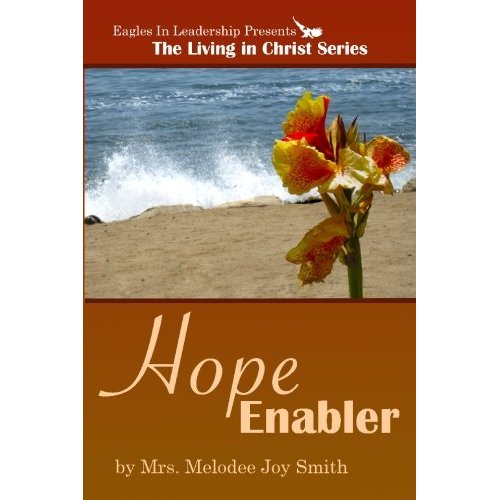
Need some hope? My wife’s new book, “Hope Enabler” will refresh your soul and lift your spirits!

You can obtain more help from the FREE Bible reading schedule on our resource page. In His Image is a daily devotional that also follows our reading schedule and expresses the Biblical truth: “God Created You to Love You.” You can find this resource on the side bar of our website.

Posted in Just Read It! | Tagged , , | Leave a comment

Old Testament Route #3: Experiencing the Original Journey with the People of God

Editor’s Note: We continue our series of blogs for those who are reading the Bible with us cover-to-cover this year. Interspersed with our thoughts on our daily reading, we want to provide some tips about reading the Bible in general. Today we want to explore …

Old Testament Route #3

Following the Original Journey of the People of God

Our first two routes are written as a diary or journal of the actual travels of the people of God in the Old Testament. They are their history books.  As we travel on these two routes, we will be following the original journeys as they unfold, often as if we were participants in the actual events. We have already considered the first two routes:

  • Route No. 1: Forming the first five books of the Bible. On this route we will explore approximately 2,300 years of the formation history for the nation of Israel.
  • Route No. 2: Taking a walk through the history of Israel. On this route we will explore approximately 1,000 years of Israel’s history. It will include the glory days of David and Solomon and the disaster days of Civil War and captivity.  It will end with a broken and weak remnant that is allowed to return to their conquered home in Israel. When we complete this route, we will have read the entire history of the Old Testament.

The final three routes are written in a diary format to express the feelings of the eyewitnesses as each event occurred.  These routes help us in:

Experiencing the Original Journey with the People of God

On these routes we are no longer just a participant or a follower on the journey. Now we also experience the events.  We feel with the people of God, not just travel with them. As we experience what they go through, our emotions become involved. Consider the final three routes in our journey through the Old Testament.

  • Route No. 3: Enjoying the poetry of the Old Testament. On this route we will explore the imagination, hopes, and dreams of the major poets from Israel’s history. Taken from all along the journey of the Old Testament, these works are assembled into five books. Israel’s major poets work to express themselves, their relationships with God and man, their struggles and their triumphs. Truly this is the inspirational literature of the Bible. We will look at:
  • The book of Job, and explore the question of why good people suffer.
  • The book of Psalms, and we will sing songs about the heart of God.
  • The book of Proverbs, and discover wise words to raise children by.
  • The book of Ecclesiastes, and understand the futility of a life lived for self.
  • The book of the Song of Solomon, and be warmed by a love song of marriage.

We will look at the final two routes, which are written in a diary format to express the feelings of the eyewitnesses as each event occurred later on our journey through the Bible, cover-to-cover in 2011!

It is our hope that this background information helps a bit as you read on in the Bible. We will continue this series with our next installment on Tuesday when we talk in detail about the “The Book of Deuteronomy – Renewed Hope.”

For daily insights into the passage we are reading together each day, you can follow Dr. Smith on Twitter and on Facebook.

You can obtain more help from the FREE Bible reading schedule on our resource page. In His Image is a daily devotional that also follows our reading schedule and expresses the Biblical truth: “God Created You to Love You.” You can find this resource on the side bar of our website.

Posted in Just Read It! | Tagged , , , , , , , | Leave a comment

Reaching the Lost All Around Us

How do we reach the lost all around us? Recently I was asked by a group of church leaders: “What are some ways you have helped to mobilize a church toward greater involvement in evangelism?” Here’s my answer to them, perhaps it will be helpful to you.

  • Evangelism is about relationship 95% of the time. Therefore, we have taught people to follow the:

1)    Love them unconditionally

2)    Pay for them passionately

3)    Accept them totally

4)    Treat them as the equals they are

5)    Befriend them by inviting them into our world

6)    Live in their world (culture)

7)    Love their world (culture) – easy to do when you start eating with them!

8)    Become a part of their lives – their daily / weekly routine

9)    Become a part of their families – their lives, events and loves

  • Evangelism is about the favor and power of God. Jesus was very clear in Luke 24.48-49; Acts 1:8 that without the power of God, there will be no effective evangelism. Therefore, we teach people to follow the repeated model of Acts and gather the believers together for united prayer for power. When God provides that power, witnessing is natural to the Christ-follower. The Spirit enables us to witness effectively.
  • Evangelism is about being equipped to “give an answer for the hope that is in you.” (1 Peter 3:15) We need to understand the Gospel so that we can share it. One of the most powerful tools for witnessing is our own story. In our “Sharing Your Faith” seminar, we teach people how to share their faith and how to prepare their testimony so they are “always prepared” to witness of their walk with Christ.
  • Evangelism is about going where the fish are. (Matthew 4.19; Mark 1.17)And Jesus said to them, “Follow me, and I will make you become fishers of men.” ” (Mark 1:17, ESV) Since I have been an avid stream fisher, I know that you can’t expect the fish to come to you. You have to go to them. The average fisher doesn’t go more than 50’ from a paved road, thus most seldom catch much. Therefore, we train our people to do mission and ministry OUT THERE in the community. Coupling this principle with the previous one, we train our people to become “fishers of men.”
  • Evangelism is about restoring the adventure to witnessing. Most men and women today have lost the sacrificial adventure of the Gospel. They simply do not think about the Great Commission and the enormous significance of a life lived and sacrificed on purpose for the eternal cause of Christ. Therefore, we restore the centrality of the Gospel (Luke 9.23-26; John 14.6; Romans 1:16-17, counting of the cost (Luke 14.25-33) and the eternal gratitude and reward of the Master for such a commitment (Matthew 19.25-30; Luke 19.11-27).

We would love to hear from you and discover how you reach the lost all around you. Please feel free to comment on this blog below.

Posted in Leadership Blog, Multi-ethnic / Urban | Tagged , , , , | Leave a comment

Eradication Protocols

Editor’s Note: We continue our series of blogs for those who are reading the Bible with us cover-to-cover this year. Interspersed with our thoughts on our daily reading, we want to provide some tips about reading the Bible in general. Today we want to explore …

Eradication Protocols

The book of Numbers reveals many enemies to our love for the Lord.

1.    The first enemy is fear. (Numbers 13.30-33) This is often a result of a lack of relationship with God.

2.    A second enemy to our love for God is doubt. (Numbers 14.6-9) When enemies appear in our lives, we doubt God’s love because we wanted “Easy Street.” A lack of faith is usually at the center of our doubt. Faith is enhanced and nurtured when we hear the Word of God. (Romans 10.17)

3.    Another enemy to our love for God is rebellion. In Numbers 16.1-2 we discover that 4 men incited 250 men to rebel against God’s leadership. This demonstrates a lack character.

4.    Distrust is seen as an enemy of our love for God in Numbers 20.12-13. Often this is displayed in bouts of anger. This reveals we have a lack of certainty, assurance in God and his lovingkindness.

5.    As Numbers 21.4-6 shows us that impatience, as evidenced in the people’s murmuring in this passage can really destroy our walk with God. This often demonstrates a lack of maturity.

6.    Numbers 25.1-3 shows us that moral compromise can be a great enemy of our love for God. Someone has said, “Our morals are always a reflection of our souls.” This is a lack of godliness within.

o   In order to eradicate the enemies of our faithful love for God we must learn to follow the Shepherd!

The Lord replied, “Take Joshua son of Nun, who has the Spirit in him, and lay your hands on him. Present him to Eleazar the priest before the whole community, and publicly commission him with the responsibility of leading the people. Transfer your authority to him so the whole community of Israel will obey him. When direction from the Lord is needed, Joshua will stand before Eleazar the priest, who will determine the Lord’s will by means of sacred lots. This is how Joshua and the rest of the community of Israel will discover what they should do.” Numbers 27:18-21 (NLT)

We eradicate these enemies when we allow God to work in our lives. If we allow Him, …

§  He will turn our eyes back to the Lord and off of the scary enemies that bring us fear.

§  He will fill our heart with hope in the love of God and remove the doubts placed there by our enemies to destroy us.

§  He will focus our memory upon the Lord’s faithfulness in times past so that the enemy of rebellion does not lead us to irrevocable harm.

§  He will assure us of the character of God when our journey grows long and our distrust grows strong.

§  He will draw us into prayer in those hours when we can’t seem to wait a moment longer because our impatience is eating us alive.

§  He will feed us from God’s Word so that we do not minimize or compromise the wisdom of God for the fleeting feelings of the moment.

You can trust God!

It is our hope that this background information helps a bit as you read on in the Bible. We will continue this series with our next installment on Sunday when we talk in detail about the “Old Testament Route Number 3.”

For daily insights into the passage we are reading together each day, you can follow Dr. Smith on Twitter and on Facebook.

You can obtain more help from the FREE Bible reading schedule on our resource page. In His Image is a daily devotional that also follows our reading schedule and expresses the Biblical truth: “God Created You to Love You.” You can find this resource on the side bar of our website.

Posted in Just Read It! | Tagged , , , , , , | Leave a comment

Moses Prepares the New Generation for Invasion! (Numbers)


Editor’s Note: We continue our series of blogs for those who are reading the Bible with us cover-to-cover this year. Today we discover that …

Moses Prepares the New Generation for Invasion

(Numbers 26-36)

After forty years of aimless wanderings to birth a new, hope-filled generation and bury the old, rebellious generation, God is ready to try again! As the new generation travels closer to Canaan, Moses, now 120 years old, begins again to prepare a people for the impending invasion of the land God so long ago promised to Abraham! Watch for these three specific events along the way:

  • Moses again organizes a new generation for the impending invasion. (26-27)
  • Moses again reviews the practices to be established once the new generation has successfully invaded the land. (28-30)
  • Moses conquers the land on the East side of the Jordan River in demonstration of the impending victory of the nation of Israel. (31-36)

It is our hope that this background information helps a bit as you read on in the Bible. We will continue this series with our next installment on Friday when we talk about the “Eradication Protocols.”

For daily insights into the passage we are reading together each day, you can follow Dr. Smith on Twitter and on Facebook.

You can obtain more help from the FREE Bible reading schedule on our resource page. In His Image is a daily devotional that also follows our reading schedule and expresses the Biblical truth: “God Created You to Love You.” You can find this resource on the side bar of our website.

Posted in Just Read It! | Tagged , , , | Leave a comment

Transformed! Interviews Sheila Walsh

Transformed’s Mike Powers caught up with Sheila Walsh this week and spoke about her walk with God, her new book The Shelter of God’s Promises and her ministry.

Walsh began her career as a contemporary Christian singer after finishing college with studies in theology from London Bible College (now London School of Theology) in 1979 and music from the London Academy of Operatic Art. Sheila worked as an evangelist with the British chapter of Youth For Christ and sang with a group known as “The Oasis” until going solo in 1981. She also worked closely at this time with keyboard player Chris Rolinson, who contributed extensively to the unique sound on her first “new wave” style album, Future Eyes. He also toured with her on her first United States tour, where she opened for Phil Keaggy. As Sheila enjoyed some success both in the United Kingdom and America as a CCM musician, she was asked by the conservative minister Pat Robertson to serve as a co-host of his television talk-show, The 700 Club in 1987. Sheila served in this capacity into 1992 and also hosted her own talk-show, Heart to Heart with Sheila Walsh.

Ideological differences with Pat Robertson and general feelings of depression brought Sheila to re-examine her life’s direction. After leaving Pat Robertson’s enterprises in 1992 she sought therapy for her depression, eventually returning to college at Fuller Theological Seminary in California to take on doctoral studies in theology. Pat Robertson explained her departure from CBN as the result of a “nervous breakdown” brought on by the tremendous demands of her work with CBN. He asked his viewers to keep her in their prayers and ask God to give her the strength to continue doing His work.

She went on to write a book exploring her struggle with depression and her experiences with her faith as a Christian, entitled Honestly. While Walsh had written several books on theology before, this autobiography would become the wellspring of her later work on personal aspects of faith and would set the tone for her introspective, personal, but evangelical approach to affairs of modern theology.

Over the course of the latter 1990s, Sheila’s work has concerned women’s issues within the church and the unique relationship of the contemporary woman with God. Sheila has written over seventeen books including Honestly, Living Fearlessly, and Life is Tough, but God is Faithful. She has also written several books for children recently. She also has continued her musical career as a songwriter and singer and has recorded several albums of new Christian music and traditional hymns arranged to a Celtic sound.

In 2005, Sheila partnered with Tommy Nelson publishers to create a line of children’s books and DVDs called Gigi, God’s Little PrincessTM. The brand has become the #1 Christian Girl’s brand and continues to be popular and release new products today.

Sheila, with her family, is now an active attendee of Prestonwood Baptist Church, in Plano, Texas.

Posted in Interviews, Mike Powers, Transformed | Tagged | Leave a comment

Digging Deeper on the Major Old Testament Routes (2)

Editor’s Note: We continue our series of blogs for those who are reading the Bible with us cover-to-cover this year. Interspersed with our thoughts on our daily reading, we want to provide some tips about reading the Bible in general. Today we are …

Digging Deeper on the Major Old Testament Routes

As you can see, our map for the Old Testament is not as complicated as you might imagine. Actually, these five routes (see Friday’s post) are the only major routes through the Old Testament. We will take a brief overview of these routes now in this blog. Again, let’s return to the first route of the Old Testament – this route allows us to experience the major events of the people of God as they occur historically.

Following the Original Journey of the People of God

Our first two routes are written as a diary or journal of the actual travels of the people of God in the Old Testament. They are their history books.  As we travel on these two routes, we will be following the original journeys as they unfold, often as if we were participants in the actual events. Considered these two routes:

Route No. 2: Taking a walk through the history of Israel. On this route we will explore approximately 1,000 years of Israel’s history. It will include the glory days of David and Solomon and the disaster days of Civil War and captivity.  It will end with a broken and weak remnant that is allowed to return to their conquered home in Israel. When we complete this route, we will have read the entire history of the Old Testament. We will look at:

  • The book of Joshua, the invasion of the promised land for Israel.
  • The book of Judges, the cycles of compromise and defeat in Israel.
  • The book of Ruth, the loyalty of one woman in Israel and the heritage it brings.
  • The book of First Samuel, the beginnings of the monarchy in Israel.
  • The book of Second Samuel, the reign of King David.
  • The book of First Kings, the rise and fall of the nation of Israel, leading to Civil War.
  • The book of Second Kings, the invasion and captivity of Israel by Assyria.
  • The book of First Chronicles, the spiritual life of David.
  • The book of Second Chronicles, the spiritual evaluation of Judah’s Kings.
  • The book of Ezra, though rebuilding of Israel’s worship.
  • The book of Nehemiah, the rebuilding of Israel’s security.
  • The book of Esther, the deliverance of Israel in captivity.

It is our hope that this background information helps a bit as you read on in the Bible. We will continue this series with our next installment on Thursday when we talk in detail about the “Moses Prepares the New Generation.”

For daily insights into the passage we are reading together each day, you can follow Dr. Smith on Twitter and on Facebook.

You can obtain more help from the FREE Bible reading schedule on our resource page. In His Image is a daily devotional that also follows our reading schedule and expresses the Biblical truth: “God Created You to Love You.” You can find this resource on the side bar of our website.

Posted in Just Read It! | Tagged , , , , , , , , , , , , , , , , , | Leave a comment

Encouraging the Heart! (A Leadership Book You Should Digest!)

Editor’s Note: This review was first published on ChurchCentral.com. Dr. Smith is a regular contributor there. We encourage you to check out their website. You can do so here.

The best leaders care. (xvii)

Maybe you missed it. Many have. Written in 2003, Kouses and Pozner (K & P) my favorite leadership mentors, truly demonstrated the core of effective leadership, especially for the Christ-following leader. They are clear that great leaders:

  • Challenge the process
  • Inspire a shared vision
  • Enable others to act
  • Model the way
  • Encourage the heart. (xiii)

As you read through the stories and watch them distill the essentials for great leadership that leads from the heart to the heart, it seems as if K & P are hearkening back to principles found in the New Testament. (This is NOT a Christian book. However, it does have great help for the wise leader who can discern and learn truth from others.)

So we get a lot of satisfaction from positive feedback, and encouragement helps if we get it. Why, then, don’t we think we don’t need much affirmation? (4)

Encouraging the Heart exposes seven essential practices (habits for the wise) and breaks them down into practical, “can-do” steps every leader on every level can inculcate and imitate. As I review these seven, let me share some glimpses (there is SO much more in each chapter):

  • Set Clear StandardsLeaders must engage individuals in a discussion of what the values mean and how their personal beliefs and behaviors are influenced by what the organization stands for. Leaders must also be prepared to discuss values and expectations in recruiting, selecting, and orienting new members. Better to explore early the fit between person and organization than to find out, late in some sleepless night, that we’re in violent disagreement over matters of principle. (52) Sounds just like the way Jesus started with his disciples! (Luke 9:23-27)
  • Expect the BestSuccessful leaders have high expectations, both of themselves and of their constituents. These expectations aren’t just fluff that they hold in mind to keep a positive outlook or psych themselves up. The expectations that successful leaders hold provide the framework into which people fit their own realities … Maybe you can’t turn an ivory statue into a real person, but you can release the highest potential of your constituents. (64) When Paul sought to expand the church and make it a missional agency across the known world, he provided a simple model of reproducing disciples. (2 Timothy 2:2) The rest of the story is Christianity, as we know it.
  • Pay AttentionLeaders are out and about all the time. They’re not in their offices much; the demands of the job keep them mobile. They’re attending meetings, visiting customers, touring the plants or service centers, dropping in on the lab, making presentations at association gatherings, recruiting at local universities, holding roundtable discussions, speaking to analysts, or just dropping by employee’s cubicles to say hello. It’s the nature of leaders to wander; it goes with the territory. In fact, at its root the word lead comes for an Old English word that means “go, travel, guide.” (73) As Jesus wandered the Judean hills and the streets of Jerusalem, he modeled this type of leadership daily.
  • Personalize RecognitionWhat it comes down to is thoughtfulness: how much effort you put into thinking about the other person and what makes the recognition special for that person. It means observing an individual and asking: “What would really make this special and unique for this person – make it a memorable, one-of-a-kind experience? What could I do to make sure that she never forgets how much she means to us? What can I do to make sure he always remembers how important his contributions are?” (95) What leader doesn’t long to hear these words from Jesus? ““His master said to him, ‘Well done, good and faithful servant. You have been faithful over a little; I will set you over much. Enter into the joy of your master.’ ” (Matthew 25:23, ESV)
  • Tell the StoryStories put a human face on success. They tell us that someone just like us can make it happen. They create organizational role models that everyone can relate to. They put behavior in a real context and make standards more than statistics. Stories make standards come alive. They move us and touch us. By telling a story in detail, leaders illustrate what everyone needs to do to live by the organizational standards. They communicate specific and proper actions that need to be taken to resolve tough choices. They bring people together around the campfire to learn and have fun. (106) Is it any wonder that most of the Old Testament and the Gospels are story?
  • Celebrate TogetherCelebrations – public statements by their very nature – give expression to and reinforce commitment to key values. They visibly demonstrate that the organization is serious about adhering to its principles. So it’s important to be clear about the statements you’re making. What are you reinforcing? What are you saying is significant about this moment? Parties are fine, but celebrations are more than parties. They’re ceremonies and rituals that create meaning. When planning a celebration, every leader should ask, “What meaning am I trying to create?” Public ceremonies crystallize personal commitments, binding people together and letting them know they’re not alone. (123) Consider the primary celebrations of the Church – worship, baptism and communion as models. In celebrating leadership, we have many values to admire as Christ’s followers!
  • Set the ExampleWhen it comes to deciding whether a leader is believable, people first listen to the words and then watch the actions. They listen to the talk, and watch the walk; then they measure the congruence. A judgment of credible is handed down if the two are consonant. If people don’t see consistency, they conclude that the leader is at best not really serious about the words. And at worst is an outright hypocrite. (133) This sounds a lot like another set of words we are familiar with, “But be doers of the word, and not hearers only, deceiving yourselves. ” (James 1:22, ESV)

Again, these are but glimpses into each of the seven key practices of great leaders who desire to encourage their leadership’s hearts. Filled with studies, stories and studded statements, Encouraging the Heart is still a masterpiece every leader should know and seek to work out in their daily lives and into the DNA of their organization. Each chapter ends with discussion questions, so the reproducing leader can do a personal evaluation, small group leadership development with their board and team, and multiply these practices corporately with advanced training leadership groups.

If you haven’t read and digested Encouraging the Heart, you truly are missing a hidden jewel.

You can order Encouraging the Heart here.

Encouraging the Heart

James M. Kouses and Barry Z. Posner

Jossey-Bass; 1 edition (January 21, 2003)

ISBN-10: 0787964638

Posted in Book Reviews | Tagged , , , , , | 1 Comment